
Would forest industry by-products be food? The master’s course in Circular Economy introduced LAB Biofine

The group looked at the potential of biomass from forestry by-products as new food ingredients. The work focused on the biorefining processes used by LAB Biofine and the key components of biorefineries, namely cellulose, hemicellulose and lignin.
The group work combined a literature review, the latest industry information and consultation with LAB Biofine's experts. The work also examined the ecological, social and economic impacts of novel foods produced from forest biomass, as well as the legal measures necessary to obtain Novel Food approval from an EU regulatory perspective.
The idea came from the LAB Biofine environment
Master’s student Miriam Pfeiffer (picture below) says that the choice of topic was interesting for her from the beginning:

"We had several topics to choose from, and Biofine, novel food from biomass was the most interesting for me. I had no previous exposure to the subject."
According to Anna-Karoliina Kauppi, the topic seemed just right:
"LAB Biofine and the use of biomass in novel foods seemed like a concrete and topical subject. The topic sparked my interest, and that's why I decided to choose it as the theme for my study."
Pfeiffer found the learning environment provided by LAB Biofine particularly motivating:
"LAB Biofine brings together research, education and business. When I heard about the potential of a biorefinery, I wanted to explore whether wood could become something more than energy."
Biomass processing surprised and opened new perspectives
During their work, the team learned about bio-based processing, where the main components of wood - cellulose, hemicellulose and lignin - are separated and processed into new raw materials. Pfeiffer says she was surprised:
"I was surprised at how advanced the research is and how much potential there is to create value and food from side and waste streams. I was also surprised by myself. I was fascinated by the subject, even though I was only scratching the surface. I come from a design and architecture background, so the learning curve was steep."
The group discovered that wood-based components can be processed into a wide range of ingredients for the food industry.
"Microcrystalline cellulose is already in use in a number of products, where it is used to improve the texture of foods, for example to control texture and consistency. Xylo-oligosaccharides (XOS), on the other hand, are dietary fibres that have been shown to have various health benefits, including properties that support the well-being of the gut microbiota."
The study also showed that lignin-based ingredients can even be used as a substitute for eggs in certain recipes, opening new possibilities in areas such as baking and the development of plant-based products.
"Lignin also surprised us. It can be used, for example, to improve the structure of baked goods."
Visible economic, environmental and social impacts
Pfeiffer says the team also assessed wider impacts:
"If we can process the by-products into food, it will bring jobs and investment to the region, reduce waste and support the circular economy. In addition, consumer acceptance is crucial. Wood-based food may seem alien, but it has a strong Finnish identity behind it."
The group found that from an economic point of view, forest industry by-products can be transformed from costly items into value-added products, thus improving the profitability of the industry.
"In addition, the technology and know-how related to novel foods offer significant export potential for the development of Finland's bioeconomy."
From an ecological perspective, the group's study showed that, for example, the production of microbial proteins can reduce the consumption of land and water resources by up to 90% compared to traditional animal protein sources.
"This makes production much more resource-efficient and reduces environmental pollution and emissions."
From a social perspective, the use of side streams can bring new job opportunities, especially in areas where the forest industry is a major economic activity.
"At the same time, the solutions will strengthen Finland's self-sufficiency and food security and reduce the need for extensive land use, thus easing pressure on both domestic and international ecosystems," the team members conclude.
The group also familiarized itself with the EU's strict Novel Food legislation, which requires thorough safety assessments before commercial introduction. In conclusion, the group recommended that LAB Biofine proceed in stages:
"It is worth starting with ingredients that already have approval, such as microcrystalline cellulose, and expanding from there towards new innovations."
Lessons learned led to new opportunities
Miriam Pfeiffer describes the overall experience of the course as inspiring and educational:
"This project opened my eyes to the potential of forest industry by-streams. In the future, wood could also be something to eat on the dinner table."
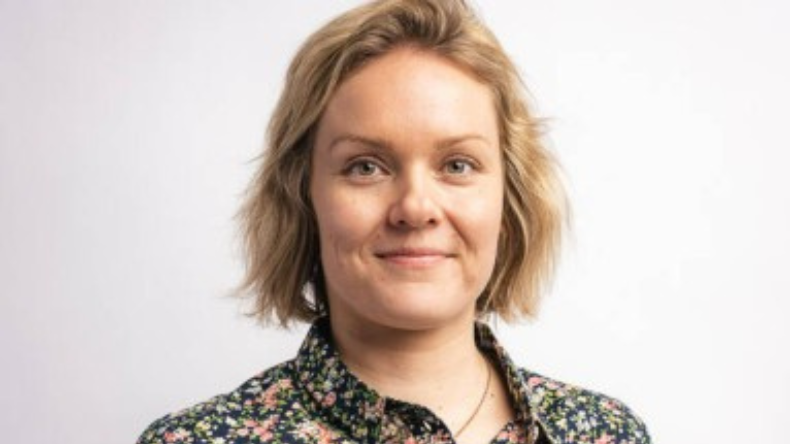
Anna-Karoliina Kauppi (picture below) says that the programme offers a concrete and practical perspective on the circular economy:
"I recommend the studies especially to those who are interested in a working life approach combined with the circular economy and responsible process and product development. The circular economy opens new business opportunities, and the training helps to identify and exploit this potential."