


Multipurpose materials
SustainaCycle

SustainaCycle -Smart Waste Collection and Recycling
The project aims to reduce waste and save resources by recycling and reusing plastic, textile, and electronic waste in Estonia, Finland, Latvia and Sweden.
Objectives:
The SustainaCycle project aims to improve how these materials are collected and reused, helping reduce waste and save natural resources. The project will pilot smart and mobile waste collection systems in Estonia, Finland and Latvia, while mapping waste chains and connecting them to companies that can recycle or reuse material. Awareness campaigns will help people understand how and why to sort waste better.
Outcomes:
SustainaCycle will set up innovative demo sites in Estonia, Finland and Latvia to collect up to 40,000 kg of plastic, textile, and electronic waste each year. The project aims to recover at least 60 % of this waste through recycling and reuse, helping reduce the need of the virgin materials. By connecting waste collectors with companies that handle recycling material recovery, SustainaCycle promotes a more circular economy. It will also raise awareness in communities to support responsible waste disposal and encourage sustainable habit.
The project aims to reduce waste and save resources by recycling and reusing plastic, textile, and electronic waste in Estonia, Finland, Latvia and Sweden.
Objectives:
The SustainaCycle project aims to improve how these materials are collected and reused, helping reduce waste and save natural resources. The project will pilot smart and mobile waste collection systems in Estonia, Finland and Latvia, while mapping waste chains and connecting them to companies that can recycle or reuse material. Awareness campaigns will help people understand how and why to sort waste better.
Outcomes:
SustainaCycle will set up innovative demo sites in Estonia, Finland and Latvia to collect up to 40,000 kg of plastic, textile, and electronic waste each year. The project aims to recover at least 60 % of this waste through recycling and reuse, helping reduce the need of the virgin materials. By connecting waste collectors with companies that handle recycling material recovery, SustainaCycle promotes a more circular economy. It will also raise awareness in communities to support responsible waste disposal and encourage sustainable habit.
More information about the project
Takes place in project:
Digitally guided textile sorting station piloted in Imatra, Finland
A user-friendly sorting station for end-of-life textiles is being piloted at the entrance hall of the Prisma hypermarket in Imatra from 15 September 2026 to 30 April 2027. The pilot station is built by LAB University of Applied Sciences.
A touch screen will guide users through a couple of questions to determine whether the textiles they bring are suitable for material recycling or should be placed in the residual waste compartment. The appropriate compartment will then open automatically based on the answers residents will click on the touch screen. Residents can use this SustainaCycle pilot solution free of charge.
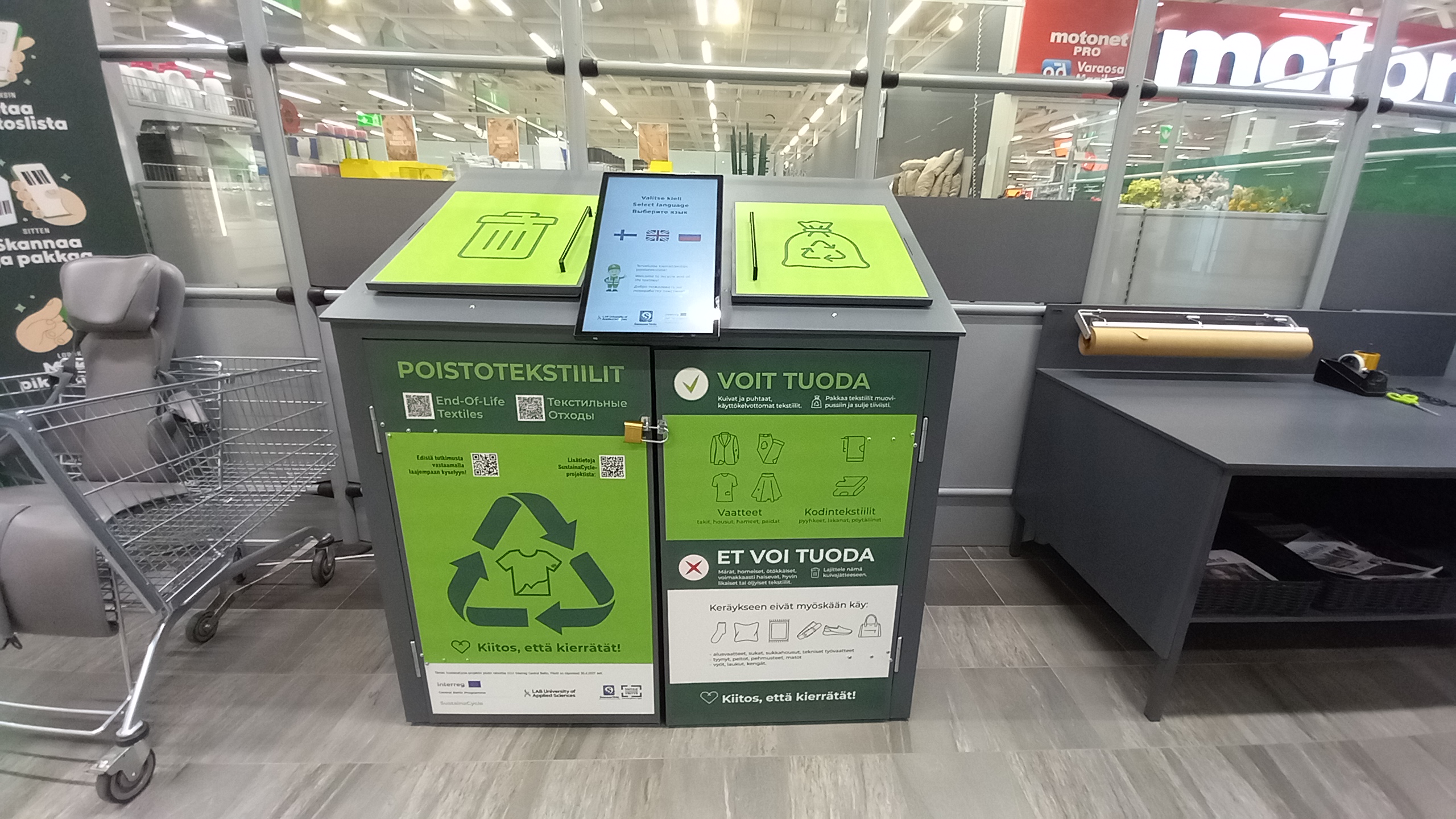
The station is intended for clean and not in use textiles, such as worn-out textiles. Users bring their end-of-life textiles to the collection point and answer questions about its condition on the screen. The system guides them step by step in deciding whether the textiles should be sent for textile recycling or classified as residual waste, then indicates which of the two compartments to use.
Both compartments have electronic locks. Only the compartment selected by the system after the questionnaire is completed will open, and a light indicator will illuminate its edge. After depositing the textiles, users can rate their experience and leave feedback on the screen. This process will help prevent improper use of the collection point while explaining how to sort end-of-life textiles correctly.
LAB University of Applied Sciences is collaborating with SaimaanVirta ry, a non-profit employment and circular economy organisation that helps people gain skills, work experience, and access to employment through training, coaching, recycling activities, and development projects. The organisation also facilitates textile collection, sorting, reuse, and recycling at its premises, supporting both social inclusion and the circular economy.
In the pilot, SaimaanVirta will be responsible for emptying the textile collection containers. Fill-level sensors installed in the collection station will automatically notify SaimaanVirta staff when either container is approaching capacity. This will enable collections to be scheduled according to actual need, improve operational efficiency, and reduce the risk of the station becoming temporarily unavailable due to overflowing containers.
The pilot aims to test whether digitally guided sorting helps people distinguish more accurately end-of-life textiles suitable for recycling and residual waste. The pilot will also assess the user experience, the station’s operation and the efficiency of the collection process.
The Imatra textile sorting station is one of the SustainaCycle project’s pilot solutions. The project pilots are being implemented in Finland, Estonia and Latvia, with each country testing a waste collection and reuse model adapted to local needs and conditions. In Estonia’s Viimsi municipality, three self-service recycling points called Ringpunkt will be established. In Latvia’s Vidzeme region, ZAAO will introduce five mobile waste collection points that will travel between communities on a set schedule.
Together, these pilots will help the participating countries explore better ways to collect and reuse plastic, textile and electronic waste. Project partners will map material flows and work with businesses, waste management companies and other organisations to find opportunities to reuse and recycle the materials collected. Once the pilots are operating in Latvia, Estonia and Finland, they are expected to collect at least 40 tonnes of waste a year in total and direct at least 60% of it to recycling or reuse.
The aim of the project SustainaCycle: Highlighting the Importance of Sustainability in Resource Recycling and Management is to increase the use of circular materials in the Central Baltic region. It seeks to improve the collection, recycling and reuse of plastic, textile and electronic waste through innovative solutions and cross-border cooperation. Project No. CB0700374 is being implemented under the Interreg Central Baltic Programme 2021–2027 from 1 May 2025 to 30 April 2028. Its total budget is €2,644,194.50.
The project partners are Valmiera Development Agency and ZAAO in Latvia; Viimsi Municipality and the Estonian Circular Economy Industries Association in Estonia; LAB University of Applied Sciences in Finland; and Sustainability InnoCenter in Sweden.
------------------------------------------------------------------------------------------------------------------------------------------------------------------
New report available: Report of current data collection tools for waste flows
We are pleased to announce that the report Report of Current Data Collection Tools for Waste Flows is now available for download.
The report provides an overview of existing mapping, analysis, and modelling tools used to collect and assess waste flow data across the Baltic Sea region. It highlights how different tools are applied to various waste streams
The findings aim to support policymakers, waste management authorities, researchers, and project developers by offering a structured overview of current practices and by identifying opportunities to strengthen regional cooperation and data alignment.
Download it on bottom of this page, in the section: Attachments and materials for the project
----------------------------------------------------------------------------------------------------------------------------------------------------------------
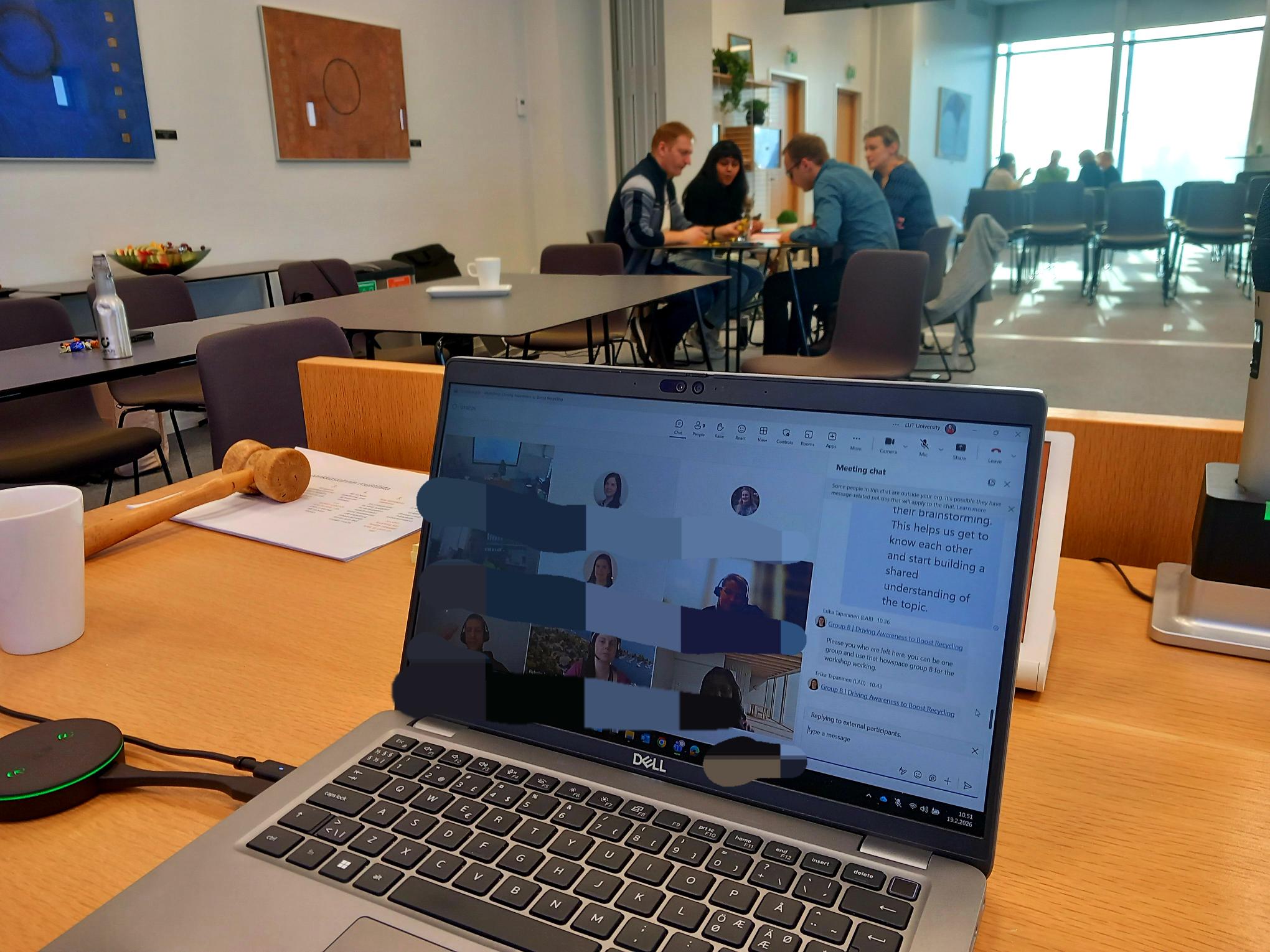
Thank you for participating in the Driving Awareness to Boost Recycling workshop
Thank you to everyone who participated in our Driving Awareness to Boost Recycling hybrid workshop on 19 February 2026 in Lappeenranta and online via Teams.
The interactive workshop brought together professionals and practitioners working with or interested in recycling, circular economy, environmental communication, and environmental education. Participants joined us from Finland, Sweden, Estonia, and Latvia, creating a valuable space for cross‑border discussion and exchange.
During the day, we focused on practical communication approaches that can help improve recycling outcomes in everyday contexts. Through collaborative workshop activities, discussions, and shared examples, participants gained new ideas they can apply in their own work, while also reflecting on common challenges and solutions.
We would like to warmly thank all participants and speakers, for their active contribution, openness, and valuable insights. Your engagement made the workshop a success.
-------------------------------------------------------------------------------------------------------------------------------------------------------------------
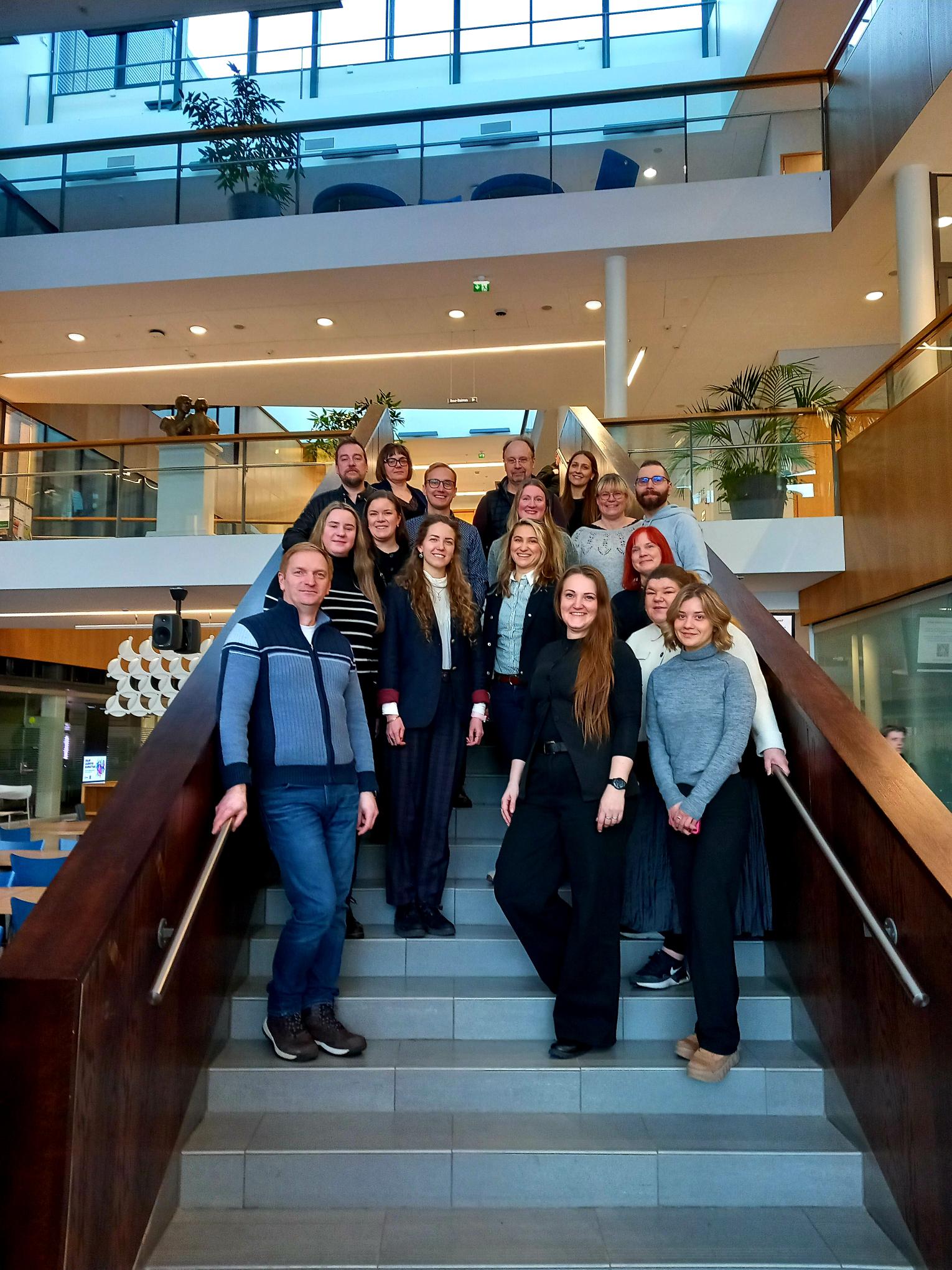
LAB Hosted Interregional Project Partner Meeting in Lappeenranta
LAB University of Applied Sciences was pleased to host an interregional meeting for project partners on 18–19 February 2026 in Lappeenranta. The meeting brought together partners to strengthen cooperation, exchange experiences, and advance the planning and implementation of pilot activities.
Over the two days, participants engaged in productive discussions on project progress, practical collaboration, and next steps, reinforcing shared objectives and building momentum for upcoming activities.
LAB extends its thanks to all partners for their active participation and open collaboration and looks forward to continuing the work together. The next interregional meeting will take place in June 2026 in Sweden, further supporting cooperation and knowledge exchange across the partnership.
Project manager
Maria Jäppinen
RDI specialist
maria [dot] jappinen lab [dot] fi
lab [dot] fiBlog articles
More information about the project
Project state
On-going
Implementation area
International
LAB role
Partner
Unit
Technology
Key competence
Multipurpose materials